

Real-Time Glucose Monitoring for Vascular Care
Feasibility of Remote Real-Time Continuous Glucose Monitoring (CGM) for vascular patients in the Acute Care Hospital Setting
Royal Perth Bentley Group
Funding: $19,940
Coordinating Principal Investigator: Ms Jennifer Nicholas
Co-Investigators: A/Prof Vicki Patton, Mrs Angeline Stibbs, Mr Thomas Fairley
People admitted to hospital with vascular disease often face complex challenges, including poor circulation, slow wound healing, and a higher risk of infection. These risks are made worse when blood glucose (sugar) levels are too high, too low, or fluctuate without being detected.
Currently, most hospitals rely on blood glucose checks via a drop of blood (finger-prick) on a test strip at set times during the day and night. While important, these checks can miss critical changes, particularly overnight or between tests, such as hidden spikes or drops in glucose levels. This means opportunities to intervene early can be lost.
This project explores whether continuous glucose monitoring (CGM) can improve care for vascular patients in the acute hospital setting. CGM uses a small, wearable sensor inserted under the skin, that continuously measures the level of glucose in the fluid around the cells (interstitial fluid). This provides real-time data to clinicians to see patterns and trends that would otherwise go unnoticed, supporting faster and more informed treatment decisions.
By monitoring glucose levels closely, the project aims to support safer treatment decisions and assist recovery for vascular patients, especially those recovering from surgery. It may also reduce the need for frequent finger-prick tests, improving comfort for patients and freeing up valuable nursing time.
This research will assess CGM’s effectiveness on detection, intervention and glycaemic outcome. The project will also consider patient comfort, staff experience, and how easily CGM can be integrated into everyday care.
The team aims to improve the understanding between glucose levels and vascular outcomes, facilitate timely clinical interventions and lay the groundwork for larger studies and future improvements in hospital treatment.
Real-Time Glucose Monitoring for Vascular Care
Feasibility of Remote Real-Time Continuous Glucose Monitoring (CGM) for vascular patients in the Acute Care Hospital Setting
Royal Perth Bentley Group
Funding: $19,940
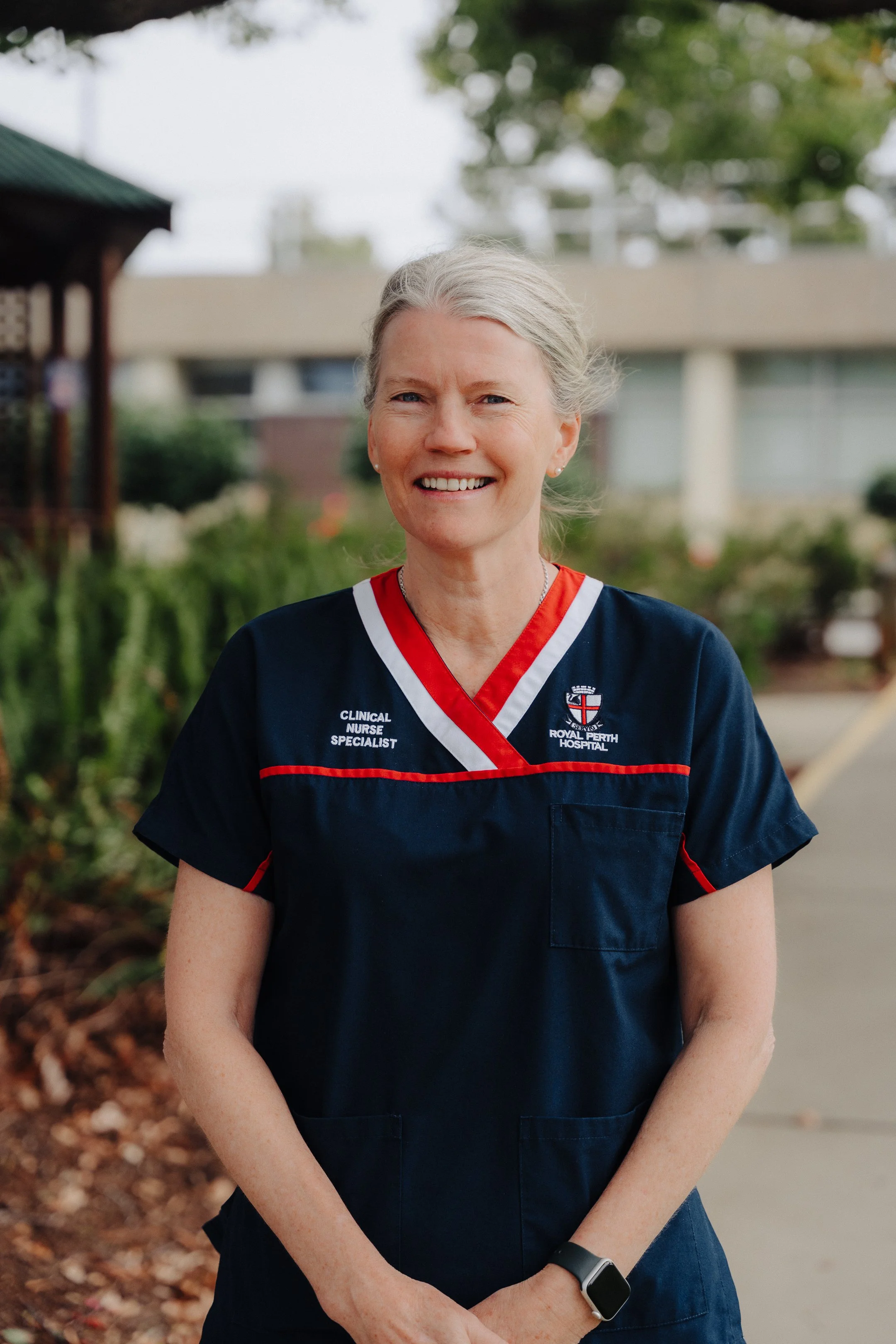
Coordinating Principal Investigator: Ms Jennifer Nicholas
Co-Investigators: A/Prof Vicki Patton, Mrs Angeline Stibbs, Mr Thomas Fairley
People admitted to hospital with vascular disease often face complex challenges, including poor circulation, slow wound healing, and a higher risk of infection. These risks are made worse when blood glucose (sugar) levels are too high, too low, or fluctuate without being detected.
Currently, most hospitals rely on blood glucose checks via a drop of blood (finger-prick) on a test strip at set times during the day and night. While important, these checks can miss critical changes, particularly overnight or between tests, such as hidden spikes or drops in glucose levels. This means opportunities to intervene early can be lost.
This project explores whether continuous glucose monitoring (CGM) can improve care for vascular patients in the acute hospital setting. CGM uses a small, wearable sensor inserted under the skin, that continuously measures the level of glucose in the fluid around the cells (interstitial fluid). This provides real-time data to clinicians to see patterns and trends that would otherwise go unnoticed, supporting faster and more informed treatment decisions.
By monitoring glucose levels closely, the project aims to support safer treatment decisions and assist recovery for vascular patients, especially those recovering from surgery. It may also reduce the need for frequent finger-prick tests, improving comfort for patients and freeing up valuable nursing time.
This research will assess CGM’s effectiveness on detection, intervention and glycaemic outcome. The project will also consider patient comfort, staff experience, and how easily CGM can be integrated into everyday care.
The team aims to improve the understanding between glucose levels and vascular outcomes, facilitate timely clinical interventions and lay the groundwork for larger studies and future improvements in hospital treatment.