A major new research program investigating advanced treatments for children and adults with brain cancer has secured $5 million in funding, supported by strategic co-funding from the RPH Research Foundation.
Through the Dobney Cell & Tissue Therapies Grant, the Foundation committed $1,487,713 in matched funding to support Associate Professor Zlatibor Velickovic and the Transforming Cancer Care in WA: Rapid Development of Novel CAR T-Cell Therapies for Children, Young Adults, and Adults with Brain and CNS Cancers program.
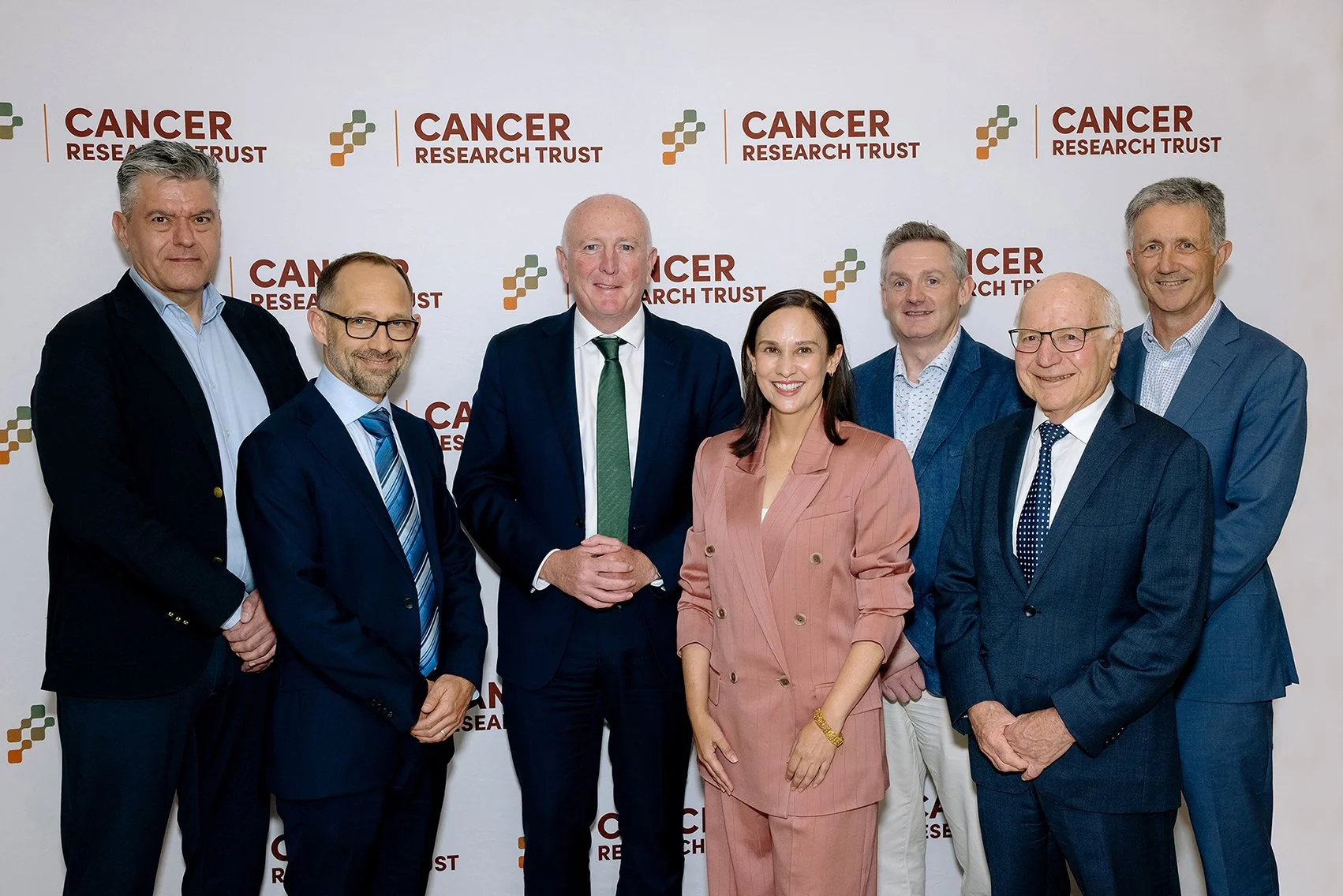
This commitment helped strengthen a successful application to the Cancer Research Trust (CRT), with Advanced Therapies for Brain Cancer (ATBC) receiving $5 million over five years in 2026.
The funding is made possible through the Future Health Research and Innovation (FHRI) Fund, the McCusker Charitable Trust and Stan Perron Charitable Foundation, as part of the WA Comprehensive Kids Cancer Centre, with the program administered by the Cancer Research Trust.
Bringing expertise together against brain cancer
Spanning both paediatric and adult brain cancers, the ATBC program brings together expertise in brain cancer research, immunology, cell therapy, RNA therapeutics, manufacturing and clinical translation.
Researchers will investigate a range of promising approaches, including CAR-T cell therapies, CAR-NK therapies, mRNA-based technologies and other forms of immunotherapy. The aim is to build the evidence needed to determine which strategies have the greatest potential to progress towards future clinical translation.
The need for new approaches remains significant. Around 2,098 Australians are diagnosed with brain cancer each year, while only 24 per cent of people diagnosed with brain cancer survive at least five years.
For children, the challenge is particularly urgent. Childhood brain tumours remain the leading cause of cancer-related death in children, and for aggressive cancers such as diffuse midline glioma (DMG/DIPG), treatment options remain limited.
Building research specifically for children
One of the ATBC program’s important areas of focus is addressing the biological differences between childhood and adult brain cancers.
While promising therapies are often developed first using adult models, childhood tumours can behave differently and children’s developing immune systems can respond differently to treatment.
The program will establish Australia’s only juvenile-age brain cancer research platform, generating paediatric-specific data to help researchers understand which immunotherapy approaches may hold the greatest promise for children with brain cancer.
Associate Professor Zlatibor Velickovic said sustained funding would provide an important opportunity to bring together different areas of expertise and build the evidence required to advance the field.
“There are still many unanswered questions when it comes to advanced therapies for brain cancer, and answering them takes time. What makes this program special is the opportunity to bring together people with different expertise and work towards a common goal over the long term.
The sustained funding gives us the continuity to build strong collaborations, test and refine new ideas, and generate the kind of evidence that’s needed to understand which approaches have the greatest potential to improve outcomes for patients.”
- Associate Professor Zlatibor Velickovic, Program Lead
Turning Foundation funding into greater research investment
The successful CRT grant demonstrates the impact of strategic matched funding. By committing close to $1.5 million through the Dobney Cell & Tissue Therapies Grant, the RPH Research Foundation has helped leverage significant additional investment into Western Australian brain cancer research.
It is an example of how Foundation funding can extend beyond an individual grant, helping researchers build competitive programs, attract substantial external investment and establish the long-term research capability needed to tackle some of the most difficult challenges in health.