New Aboriginal Artwork at the Research & Innovation Centre Precinct
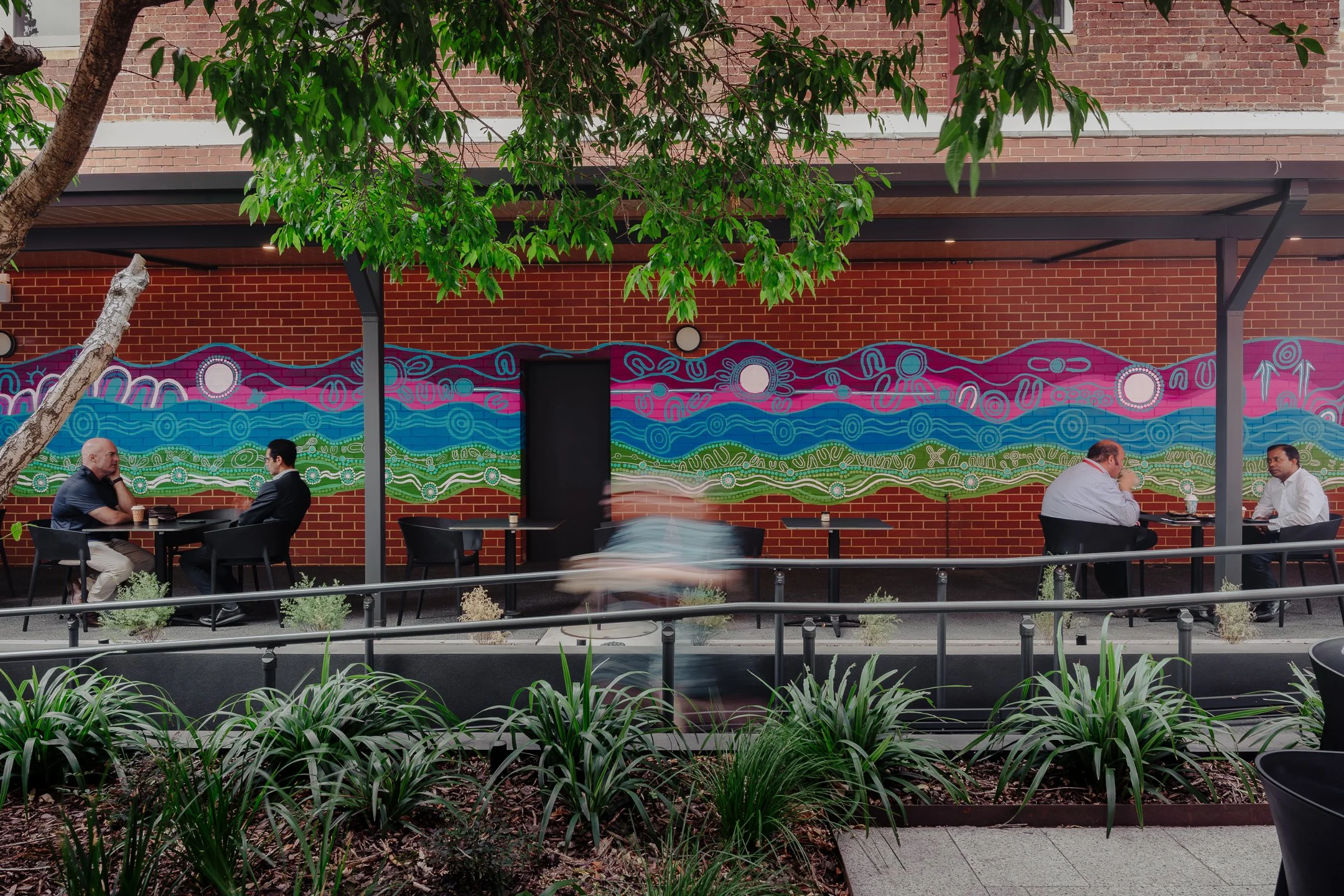
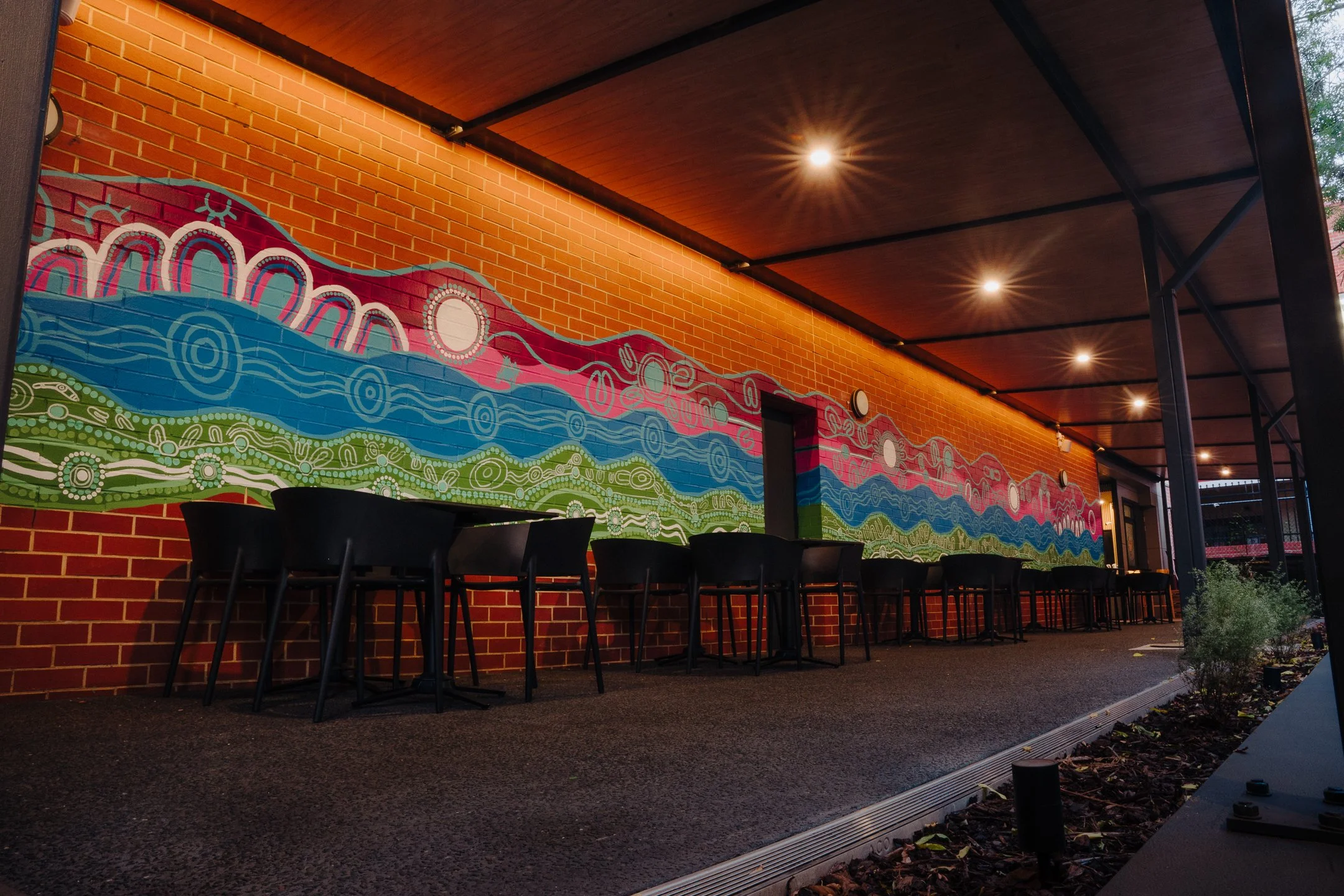
The Research & Innovation Centre Precinct now features an Aboriginal mural created by WA artist, Kevin Bynder from Mardaa.
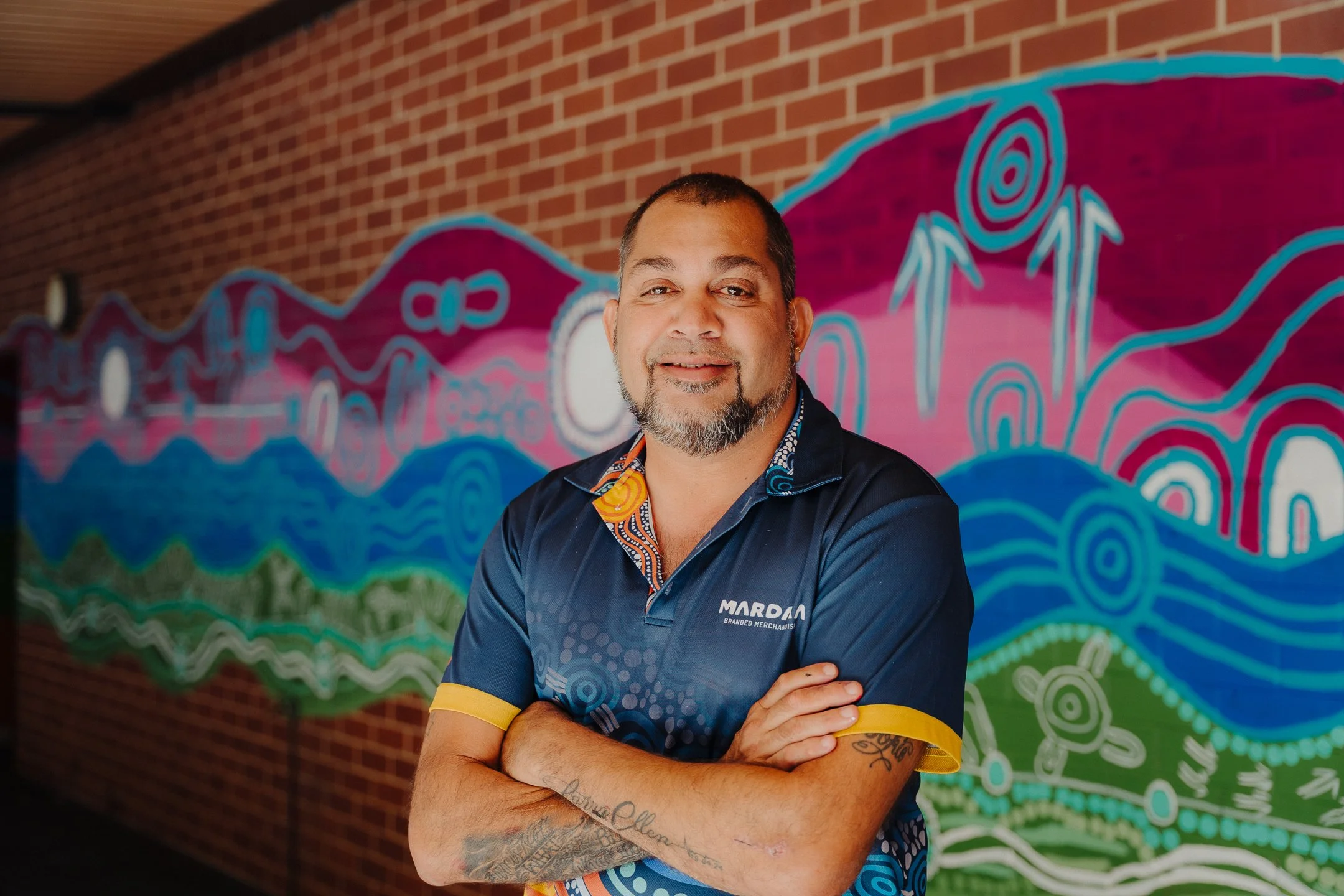
Kevin is a Whadjuk-Yuet Nyungar and Widi Badimia Yamatji artist and CEO of Mardaa. He shares stories through Indigenous art, connecting culture, Aboriginal history and Country in each design.
The mural created for the RPH Research Foundation tells the story of the RPH Research Foundation in the top part of the mural. With the Foundation represented in the middle, along with Foundation staff (shown as U-shaped symbols), the two smaller dots symbolise Royal Perth Hospital and East Metropolitan Health Service, highlighting their connections with the Foundation. Four interconnected dots represent the Foundation’s core values of Integrity, Collaboration, Innovation, and Excellence. The repeated U-shaped symbols reflect the researchers and the people of the Foundation, past and present. Two outer circles are the two Noble Prize Laureates Dr Robin Warren and Professor Barry Marshall, who revolutionised the treatment of stomach ulcers, showing the impact research has on many people.
In the middle of the mural runs the Derbal Yerrigan (Swan River) created by the Waagyl (Rainbow Serpent). In past years, the Whadkuk Boorloo Noongar people fished and hunted in the river, using the reeds for shelter and the rocks for traps. The water has a significant spiritual connection due to the source of life it creates. On each end of the mural above the Derbal Yerrigan, sits the Darling Range known to the Noongar people as Kaata-Morda which is believed to be the body of the Waagyl.
The lower section represents the boodja (land), with circles and dots connecting to show the songlines. The songlines hold traditional knowledge that is taught generation after generation. The white U-shaped symbols are ancestors whose wirrin (spirit) still belongs to the land. The three large circles are meeting places. Tribes travelling the land would stop by the river, share their songlines and meet other tribes to swap ochre, food, weapons and knowledge. The kangaroo tracks (yonga bidi) can also be seen.