
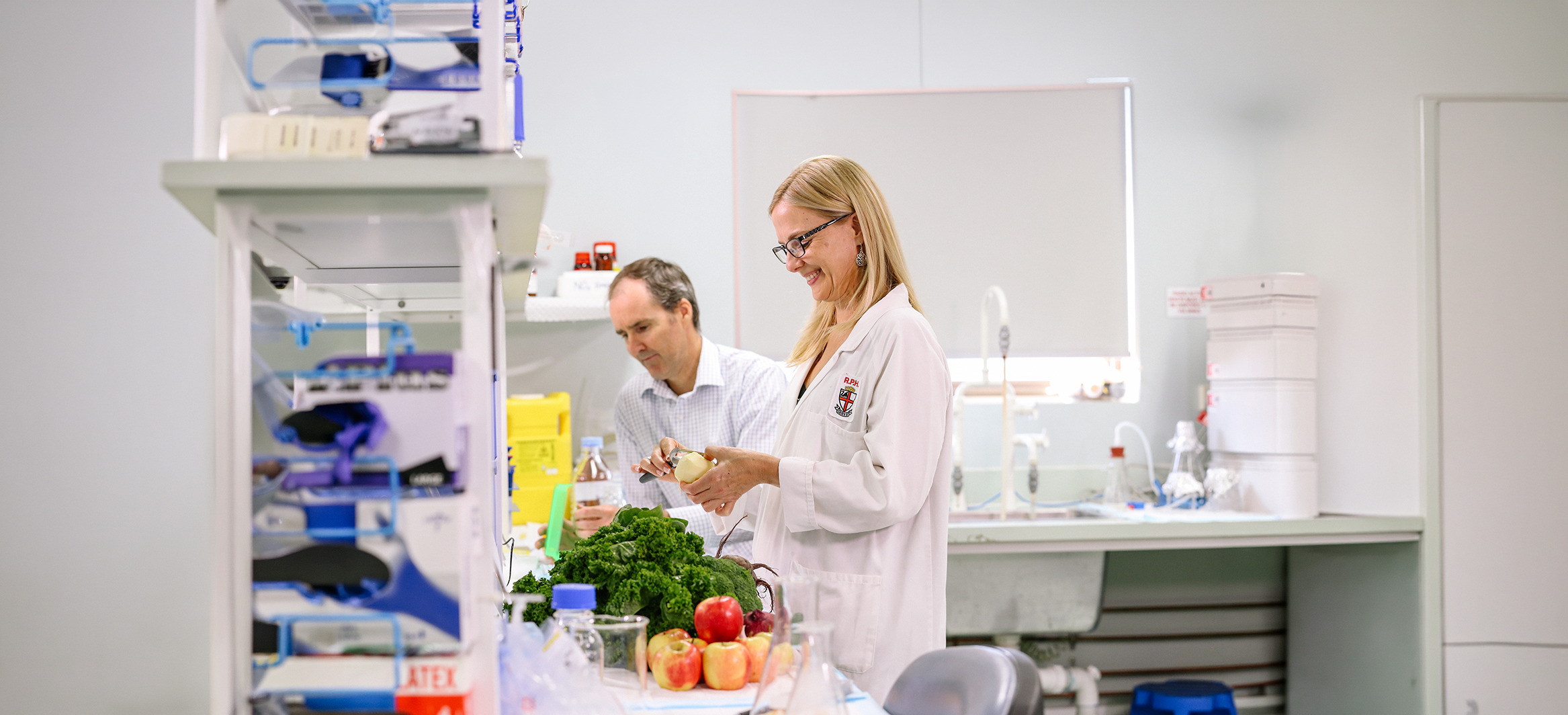
Dr Catherine Bondonno
Nitrate and human health – villain or superhero?
Edith Cowan University
Dr Catherine Bondonno
Inaugral Emeritus Professor L.J Beilin AO Fellow
Mentor: Professor Jonathan Hodgson
$166,622
Nitrate is naturally found in vegetables, meat and drinking water, but its effects on human health have long been debated. While nitrate can contribute to the formation of potentially harmful compounds known as N-nitrosamines, nitrate from vegetables can also support the production of nitric oxide, which plays an important role in cardiovascular health.
Through her Career Advancement Fellowship, Dr Catherine Bondonno investigated whether the health effects of nitrate depend on where it comes from. Her research combined controlled human studies with large population datasets to examine how nitrate from vegetables, meat and water is processed by the body and whether different sources are associated with different long-term health outcomes.
During the Fellowship, Dr Bondonno expanded her research into the Nitrate INFORMER Studies, investigating the formation of N-nitrosamines following nitrate intake from different dietary sources.
Her team also developed a highly sensitive laboratory assay capable of measuring very low levels of N-nitrosamines and expanded a food composition database to contain more than 150,000 nitrate measurements across 823 foods. Research using large population studies found that the health effects associated with nitrate may differ depending on its source.
In the Danish Diet, Cancer and Health Study, plant-sourced nitrate intake was associated with a 17% lower risk of all-cause mortality and a 14% lower risk of cancer-related mortality. In contrast, nitrate from meats where nitrate or nitrite additives are permitted was associated with an 18% higher risk of cancer-related mortality.
Other research undertaken during the Fellowship also linked plant-derived nitrate with cognitive performance and a lower risk of dementia-related mortality.
Together, these findings add to growing evidence that the health effects of nitrate may depend not simply on how much is consumed, but on the food source in which it occurs.
The Fellowship helped Dr Bondonno expand this work into a broader research program supported by further funding, including an NHMRC Ideas Grant and an RPH Research Foundation Springboard Grant.
It also supported her development as a research leader. During the Fellowship period, Dr Bondonno was promoted to Senior Research Fellow, expanded her supervision of PhD researchers and presented her work nationally and internationally.
Her research continues to investigate how the source of dietary nitrate influences health, helping build the evidence needed to better understand the role of nitrate-rich foods in healthy diets and future public health recommendations.
As the top-ranked applicant to the 2020 Career Advancement Fellowships Program, Dr Bondonno was the inaugural Emeritus Professor L.J Beilin AO Fellow.
Dr Catherine Bondonno
Nitrate and human health – villain or superhero?
Edith Cowan University
Dr Catherine Bondonno
Inaugral Emeritus Professor L.J Beilin AO Fellow
Mentor: Professor Jonathan Hodgson
$166,622
Nitrate is naturally found in vegetables, meat and drinking water, but its effects on human health have long been debated. While nitrate can contribute to the formation of potentially harmful compounds known as N-nitrosamines, nitrate from vegetables can also support the production of nitric oxide, which plays an important role in cardiovascular health.
Through her Career Advancement Fellowship, Dr Catherine Bondonno investigated whether the health effects of nitrate depend on where it comes from. Her research combined controlled human studies with large population datasets to examine how nitrate from vegetables, meat and water is processed by the body and whether different sources are associated with different long-term health outcomes.
During the Fellowship, Dr Bondonno expanded her research into the Nitrate INFORMER Studies, investigating the formation of N-nitrosamines following nitrate intake from different dietary sources.
Her team also developed a highly sensitive laboratory assay capable of measuring very low levels of N-nitrosamines and expanded a food composition database to contain more than 150,000 nitrate measurements across 823 foods. Research using large population studies found that the health effects associated with nitrate may differ depending on its source.
In the Danish Diet, Cancer and Health Study, plant-sourced nitrate intake was associated with a 17% lower risk of all-cause mortality and a 14% lower risk of cancer-related mortality. In contrast, nitrate from meats where nitrate or nitrite additives are permitted was associated with an 18% higher risk of cancer-related mortality.
Other research undertaken during the Fellowship also linked plant-derived nitrate with cognitive performance and a lower risk of dementia-related mortality.
Together, these findings add to growing evidence that the health effects of nitrate may depend not simply on how much is consumed, but on the food source in which it occurs.
The Fellowship helped Dr Bondonno expand this work into a broader research program supported by further funding, including an NHMRC Ideas Grant and an RPH Research Foundation Springboard Grant.
It also supported her development as a research leader. During the Fellowship period, Dr Bondonno was promoted to Senior Research Fellow, expanded her supervision of PhD researchers and presented her work nationally and internationally.
Her research continues to investigate how the source of dietary nitrate influences health, helping build the evidence needed to better understand the role of nitrate-rich foods in healthy diets and future public health recommendations.
As the top-ranked applicant to the 2020 Career Advancement Fellowships Program, Dr Bondonno was the inaugural Emeritus Professor L.J Beilin AO Fellow.