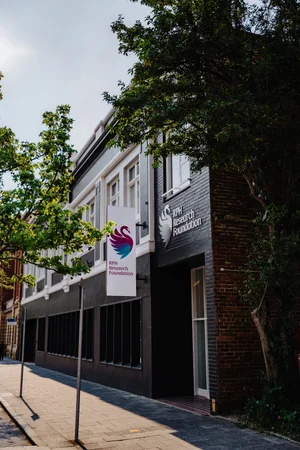
The next generation of researchers

The RPH Research Foundation is providing support to two clinicians undertaking Doctor of Philosophy (PhD) projects that aim to advance clinical practice and improve health outcomes for Western Australians. These researchers are supported by a FHRI Fund and RPH Research Foundation Clinician Researcher Training grant.
Introducing the FHRI Fund and RPH Research Foundation Clinician Researcher Training grant recipients:
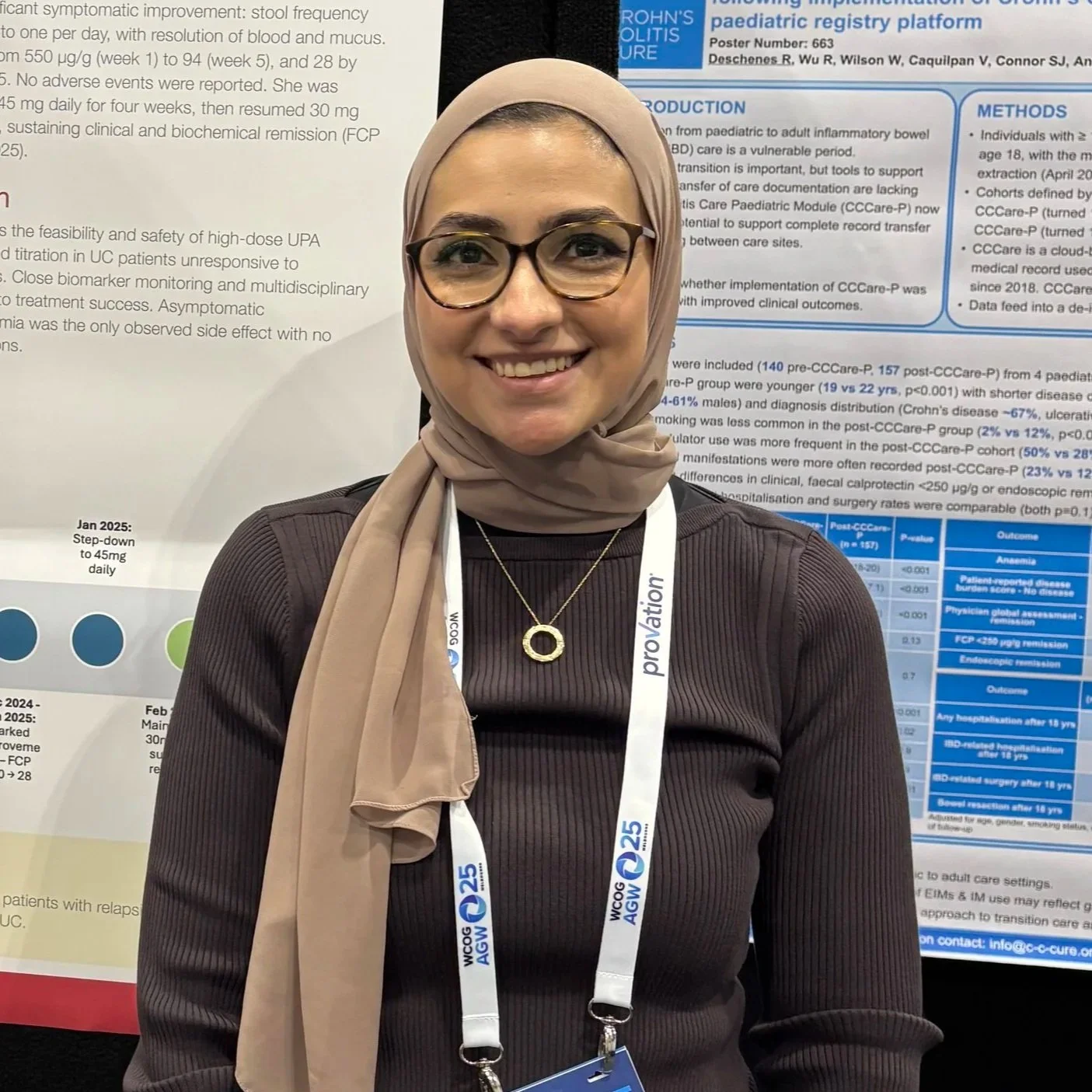
Reeham Abu-Rgeef
Reeham Abu-Rgeef, a gastroenterology specialist pharmacist, is studying the use of anti-inflammatory medication for patients with inflammatory bowel disease (IBD).
Reeham, based at Royal Perth Hospital and studying for her PhD through Curtin University, identified an important gap in research in an area she says has real potential to improve patient care.
“I wanted to undertake this research because it addresses an important question arising from real-world patient care and has the potential to generate practical evidence that could improve future care for people living with IBD,” she said.
Her project aims to improve treatment outcomes for people with IBD, including Crohn’s Disease and Ulcerative Colitis, by optimising the dose of infliximab – an important biologic medicine – during early treatment.
Patients with severe inflammation often do not respond well to standard doses.
“In my clinical practice, I see that some patients do not respond adequately to standard infliximab dosing, particularly early in their treatment when disease activity is high and achieving prompt disease control is critical,” she said.
Her study will investigate whether adjusting maintenance doses based on early blood level monitoring can improve outcomes.
“I am interested in whether a more individualised approach to treatment can improve the patient’s health,” she said.
“By using therapeutic drug monitoring earlier in the treatment course, we could better tailor therapy to the individual, improve disease control, reduce complications and support long-term effectiveness of treatment.”
The project has four phases:
A literature review of existing dose adjustment strategies.
An analysis of existing infliximab data from Royal Perth Hospital.
A randomised controlled trial comparing outcomes between standard dosing and personalised dosing.
A study exploring clinician's perspectives on therapeutic drug monitoring and dose optimisation in IBD.
Her research supports EMHS priorities to advance precision medicine and improve care for patients with complex chronic conditions, while promoting effective use of high-cost therapies.
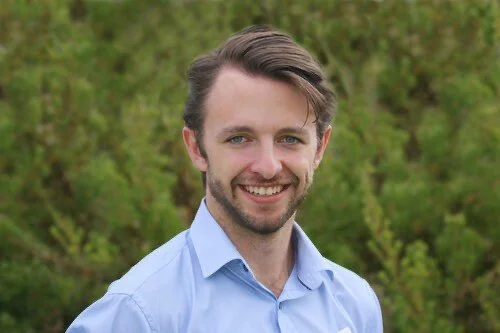
Benjamin Bowtell
At Armadale Health Service (AHS), physiotherapist Ben Bowtell is treating and studying patients with lower back pain, which counts as the fifth most common presentation to Emergency Departments (ED).
As part of his studies with Notre Dame University, he wants to produce a prediction model to help determine which patients are more at risk of ongoing lower back pain.
“I believe there is a researcher in every clinician. We use clinical reasoning in every decision with every patient,” he said.
Asked his motivation for the research, Ben said: “Learning research skills will make me an even more effective clinician and improve my reasoning and knowledge. Of course, I also hope to provide some more information to the body of knowledge in my profession.”
Ben is an Advanced Scope Physiotherapist who independently manages his own caseload in ED. Many of his patients have lower back pain, a condition which has become the second highest burden of disease in Australia.
“The focus of my research is what happens to patients after the ED. Can we predict which patients are likely to do well or who will develop ongoing pain?
“My hypothesis is that the patient experience is crucial -- who they are, what they know, what they are told, are they reassured and are they given hope?
“In my opinion, the ED presents a frontline opportunity to manage these patients before they become chronic.”
Currently, patients are discharged without a continuing care program, with one in four likely to develop persisting pain and one in 10 using pain-killing opioids after 12 months.
Ben’s research will look at different interventions to assess the cost-effectiveness and acceptability, such as follow-up virtual clinics and online learning. The intention is to create a flowchart for ED staff to provide best practice care.
What will this achieve?
Targeted patient care with reduced opioids and imaging.
Improved education
Digital solutions to engage patients
Discharge options for medical professionals managing these patients
Reduce the number of patients who return to ED with low back pain.
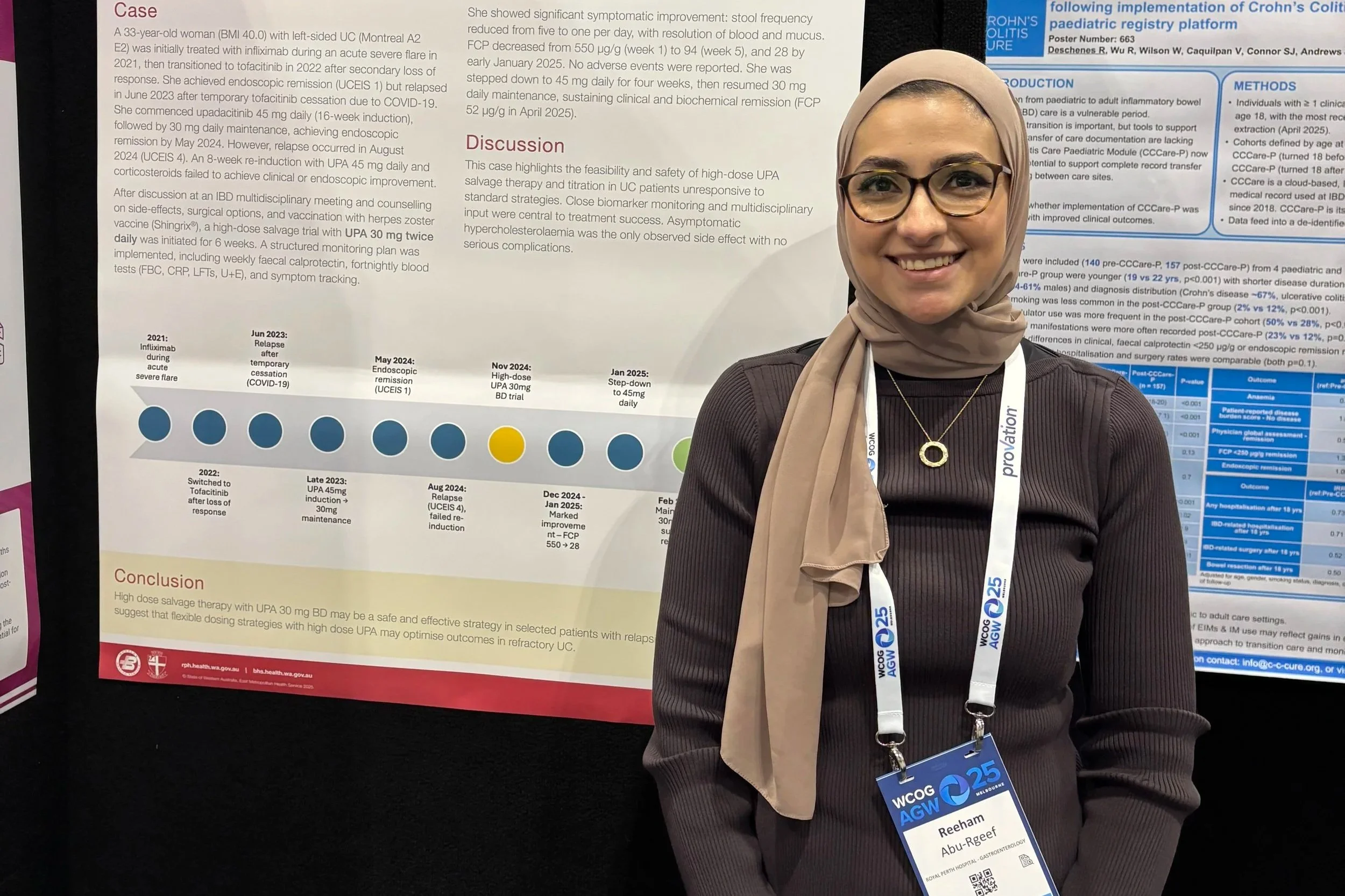
Reeham Abu-Rgeef
Reeham Abu-Rgeef, a gastroenterology specialist pharmacist, is studying the use of anti-inflammatory medication for patients with inflammatory bowel disease (IBD).
Reeham, based at Royal Perth Hospital and studying for her PhD through Curtin University, identified an important gap in research in an area she says has real potential to improve patient care.
“I wanted to undertake this research because it addresses an important question arising from real-world patient care and has the potential to generate practical evidence that could improve future care for people living with IBD,” she said.
Her project aims to improve treatment outcomes for people with IBD, including Crohn’s Disease and Ulcerative Colitis, by optimising the dose of infliximab – an important biologic medicine – during early treatment.
Patients with severe inflammation often do not respond well to standard doses.
“In my clinical practice, I see that some patients do not respond adequately to standard infliximab dosing, particularly early in their treatment when disease activity is high and achieving prompt disease control is critical,” she said.
Her study will investigate whether adjusting maintenance doses based on early blood level monitoring can improve outcomes.
“I am interested in whether a more individualised approach to treatment can improve the patient’s health,” she said.
“By using therapeutic drug monitoring earlier in the treatment course, we could better tailor therapy to the individual, improve disease control, reduce complications and support long-term effectiveness of treatment.”
The project has four phases:
A literature review of existing dose adjustment strategies.
An analysis of existing infliximab data from Royal Perth Hospital.
A randomised controlled trial comparing outcomes between standard dosing and personalised dosing.
A study exploring clinician's perspectives on therapeutic drug monitoring and dose optimisation in IBD.
Her research supports EMHS priorities to advance precision medicine and improve care for patients with complex chronic conditions, while promoting effective use of high-cost therapies.
Benjamin Bowtell
At Armadale Health Service (AHS), physiotherapist Ben Bowtell is treating and studying patients with lower back pain, which counts as the fifth most common presentation to Emergency Departments (ED).
As part of his studies with Notre Dame University, he wants to produce a prediction model to help determine which patients are more at risk of ongoing lower back pain.
“I believe there is a researcher in every clinician. We use clinical reasoning in every decision with every patient,” he said.
Asked his motivation for the research, Ben said: “Learning research skills will make me an even more effective clinician and improve my reasoning and knowledge. Of course, I also hope to provide some more information to the body of knowledge in my profession.”
Ben is an Advanced Scope Physiotherapist who independently manages his own caseload in ED. Many of his patients have lower back pain, a condition which has become the second highest burden of disease in Australia.
“The focus of my research is what happens to patients after the ED. Can we predict which patients are likely to do well or who will develop ongoing pain?
“My hypothesis is that the patient experience is crucial -- who they are, what they know, what they are told, are they reassured and are they given hope?
“In my opinion, the ED presents a frontline opportunity to manage these patients before they become chronic.”
Currently, patients are discharged without a continuing care program, with one in four likely to develop persisting pain and one in 10 using pain-killing opioids after 12 months.
Ben’s research will look at different interventions to assess the cost-effectiveness and acceptability, such as follow-up virtual clinics and online learning. The intention is to create a flowchart for ED staff to provide best practice care.
What will this achieve?
Targeted patient care with reduced opioids and imaging.
Improved education
Digital solutions to engage patients
Discharge options for medical professionals managing these patients
Reduce the number of patients who return to ED with low back pain.